Audience research
Bilingual listening in Wales, handling Welsh-language posts without mistranslation
Social listening tools miss or mistranslate Welsh posts unless you tune coverage, test query terms and run checks before Welsh content reaches a report.
What to take away
- Social listening tools treat Welsh as an afterthoughtdefault language detection and English-only query sets are the main reason Welsh posts vanish from reports.
- Sizing the Welsh-language conversation starts with official numbers, not vendor claims, and the Census plus StatsWales give you a defensible base.
- Coverage checks and mistranslation checks are two different jobs, and both belong in the workflow before anything reaches a client or minister.
- Welsh Government campaign monitoring needs bilingual query sets that follow the campaign's own wording in both languages.
- Bilingual query term testing, including stemming and mutation handling, is the highest-return task in a Welsh monitoring setup.
- A short quality gate, run every reporting cycle, catches most of what goes wrong.
How Welsh-language conversation differs from translated English posts
Welsh social conversation is not English conversation rendered into Welsh. It is a separate body of posts, written by different people, for different reasons, and it behaves differently in every tool you own.
Welsh vs Translated English Posts
Welsh post
- Origin
- Composed in Welsh
- Audience
- Welsh speakers
- Register
- Formal to informal
- Vocabulary
- Borrowings and coinages
- Place names
- Welsh and English forms
- Word shapes
- Mutations change letters
Translated English post
- Origin
- Rendered from English
- Audience
- English readers
- Register
- Single register
- Vocabulary
- One accepted form
- Place names
- English form only
- Word shapes
- Stable openings
Start with the obvious point. A post written in Welsh by a first-language speaker is not a translation of anything. It was composed in Welsh, often for a Welsh-speaking audience, and it carries assumptions an English post would not. Treating it as a translated artefact is the first mistake monitoring teams make.
Welsh language use also varies sharply by setting. A bilingual brand monitoring Wales programme has to cope with formal Welsh in public sector posts, informal Welsh in community groups, and code-switching inside a single sentence.
The vocabulary is not a mirror of English either. Borrowings sit alongside native coinages, and the same concept may appear under two or three accepted forms. A tool that knows one form finds only part of the conversation.
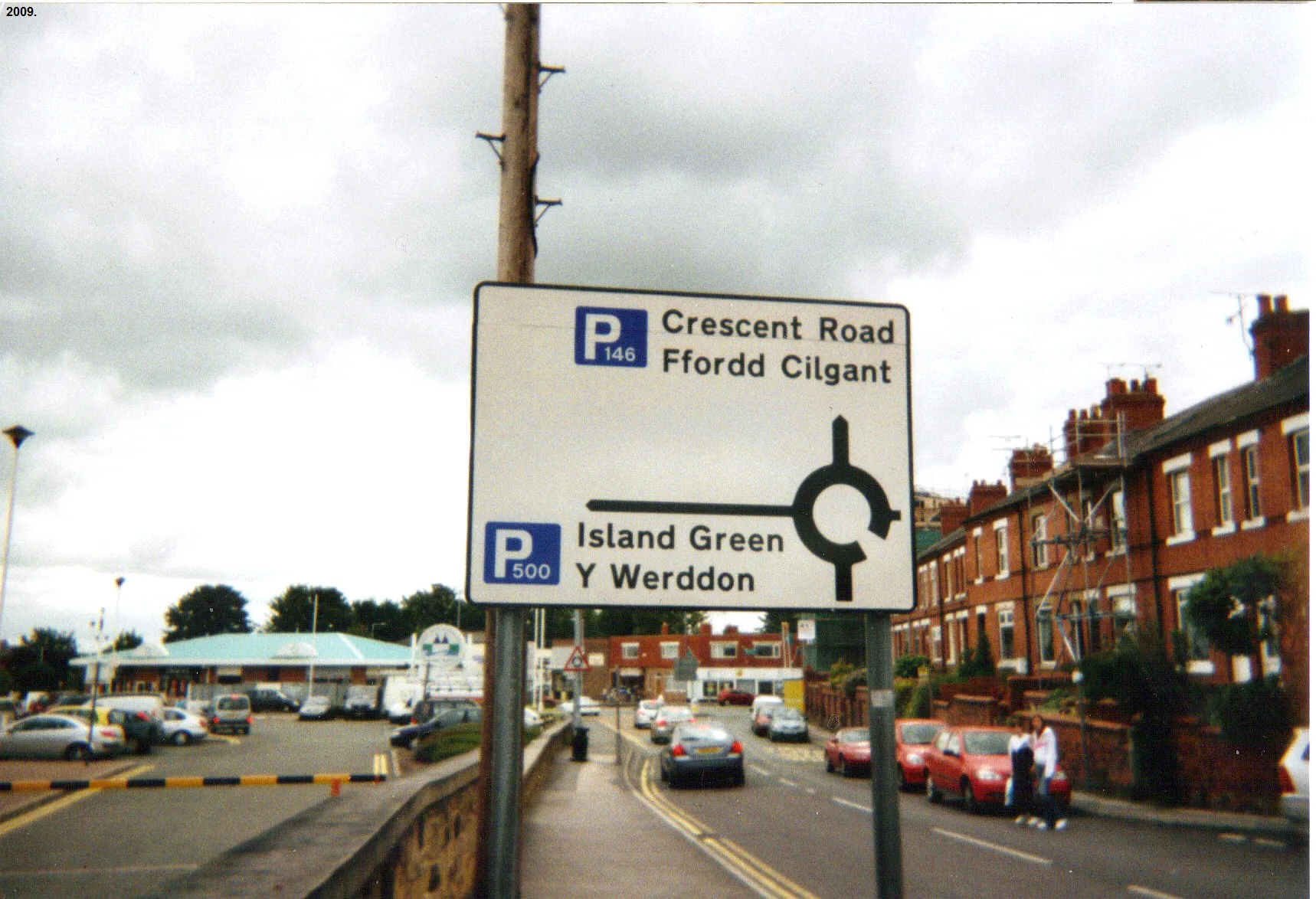
Place names cause trouble. Welsh and English forms of the same town both circulate, and some campaign material uses one form deliberately. If your query set only holds the English form, you lose the Welsh-language posts that matter most locally.
Mutations matter more than most English-speaking analysts expect. Welsh changes the opening letters of words in ordinary grammar, so a keyword can appear in several shapes in one document. Substring matching helps but drags in noise, which is why the tests in section six matter.
Finally, volume is smaller than the English conversation, so a missed post is a larger share of the total. In English, a coverage gap of a few per cent is tolerable. In Welsh, the same gap can remove a visible chunk of the debate.
Sizing Welsh-language social conversation with official statistics
Before you argue about tool coverage, work out how large the Welsh-language audience actually is. Two official sources do most of the work.
Sizing the Welsh Audience
- Census: population base and ability
- StatsWales: local authority breakdowns
- Welsh language: orientation only
- Combine into a sizing note
- Estimate addressable conversation
The Census is the anchor. It records Welsh language ability across Wales and gives you a population base you can quote without embarrassment. Use it to state how many people can speak Welsh, then treat that as the ceiling for any Welsh-language social audience. Census language and demographic data publishes the figures and the geography breakdowns.
StatsWales carries the Welsh-specific series, including language data and local authority breakdowns. It is the right place to check whether a claim about Welsh speakers in a particular county is defensible. StatsWales Welsh-language statistics is the starting point for that check.
For background on how the language is used — how often people speak Welsh, and in which settings — the Welsh Government's Welsh Language Use Survey is a reasonable orientation read. It complements the Census rather than replacing it: use it to frame your own understanding, and quote the Census and StatsWales figures in a client report.
Combine the two official sources into a simple sizing note. Population, ability, and the share who use Welsh daily give you a defensible estimate of the addressable conversation. Anything beyond that is modelling, and you should label it as such.
This sizing matters because it sets expectations. If Welsh-language posts are a small share of total mentions, a client may accept a lower absolute count, provided coverage is complete. If they are a large share in a target county, a thin Welsh-language result set is a red flag.
Keep the sizing note with the project file. It answers the first challenge any reviewer will raise, which is whether the Welsh-language sample is large enough to support the conclusions drawn from it. A target audience for social listening defined this way, with population and language ability behind it, survives scrutiny better than a guess.
Tool settings that stop Welsh posts being missed
Most coverage failures are configuration failures. Work through these settings before you blame the data.
Not every platform handles Welsh the same way. Brandwatch, Talkwalker, Meltwater, Pulsar and Sprout Social all publish their own language-coverage documentation, and whether Welsh is listed — and whether Welsh posts survive low-confidence detection — varies by product and by tier. Check the vendor's supported-language list before you assume coverage, and ask directly whether Welsh-language posts are retained rather than discarded.
Tool Settings for Welsh Coverage
- Retain unknown-language posts, do not discard
- Set Welsh and English as monitored languages
- Build query terms bilingually from the start
- Supplement location filters with language filters
- Ask provider about Welsh sampling rates
Language detection is the first gate. Many platforms auto-detect language and quietly drop posts below a confidence threshold. Welsh, being lower-resource, often falls under that threshold and gets classified as unknown or as English. Check what your tool does with unknown-language posts, and make sure they are retained rather than discarded.
Set Welsh and English both as monitored languages for the project. If the tool only allows one primary language, run two parallel streams and merge them at analysis. Do not rely on a single stream with an English bias.
Query terms need to exist in both languages. A campaign name in English will not find Welsh posts that use the Welsh name. Build the query set bilingually from the start, not as a translation task at the end.
Check your geolocation logic. Filtering by location can exclude Welsh-language posts from accounts with no stated location, which is common in smaller communities. Where location filtering is essential, supplement it with a language filter rather than relying on geography alone.
Retention windows matter too. Some tools sample rather than collect everything. Ask your provider directly whether Welsh-language posts are sampled at the same rate as English ones. If the answer is unclear, treat the Welsh counts as indicative only.
Finally, document every setting in the project file. When a reviewer asks why a particular post was missed, you want a written answer rather than a reconstruction. The same discipline applies before a social listening release leaves the team, where configuration notes sit in the release pack.
Mistranslation checks before a Welsh post enters a report
Machine translation of Welsh is improving but it is not reliable enough to publish unchecked. Google Translate and Microsoft Translator both list Welsh among their supported languages, and either can give you a usable first pass. Neither handles negation, idiom or formal register evenly, so a human check stays mandatory. A mistranslated quote in a report to a Welsh audience is a reputational problem, and it is avoidable.
Mistranslation Check Before Publishing
- One person produces working translation
- Second checker compares against original
- Check negation, tense and idiom
- Keep original Welsh quote in appendix
- Leave names and place names untranslated
- Run coverage check on known accounts
Treat translation as a two-person task. One person produces the working translation, another checks it against the original. The checker does not need to be a fluent translator, but they do need enough Welsh to spot a wrong subject, a reversed negative, or a missing clause.
If a translation is going to be published, bring in a qualified translator. Cymdeithas Cyfieithwyr Cymru, the association of Welsh translators and interpreters, keeps a directory of members, and the Welsh Language Commissioner's guidance on communicating in Welsh is the reference point for public bodies in Wales. A directory entry is not a guarantee of quality on its own, but it is a better starting point than an anonymous service.
Watch for the specific failure modes. Negation is the most common, because Welsh negation patterns differ from English: 'dw i'n hoffi' ('I like') becomes 'dw i ddim yn hoffi' ('I don't like'), and machine systems often drop the 'ddim'. Tense is the second, particularly around future intentions, where a form such as 'hoffwn i' ('I would like') carries a softened sense that English rarely marks. Idiom is the third, and it is where literal translation reads worst.
Quotes need special care. If you plan to publish a Welsh quote in English, keep the original alongside the translation in the report appendix. That way a reader who speaks Welsh can verify the rendering, and you have a record of what was actually said.
Names and place names should not be translated at all. Keep the form used in the original post, and add the alternative form in brackets only where it aids the reader.
Run a coverage check at the same time. Mistranslation checks look at the quality of what you captured. Coverage checks ask what you failed to capture. Pick a sample of known Welsh-language accounts and confirm their posts appear in your dataset. If they do not, fix the configuration before you fix the wording.
Record both checks in the project log with the date and the person who ran them. A short note is enough. The point is that someone can see the check happened, and repeat it next cycle.
Monitoring Welsh Government campaign cycles bilingually
Welsh Government campaign monitoring is a distinct job, and it runs to a different rhythm from commercial brand monitoring. Campaigns launch bilingually, run for fixed periods, and are judged against published language expectations.
Welsh Government Campaign Cycle
- Pre-launchWatch leaks and early reactions
- Launch weekPeak volume and sentiment
- Weeks afterSentiment settles, learning sits
Start with the policy frame. The Welsh Language (Wales) Measure 2011 created the Welsh Language Commissioner and the Welsh Language Standards, which set out what public bodies in Wales must do in Welsh. Cymraeg 2050, the Welsh Government's language strategy, sets the ambition those duties serve. Knowing which standard applies matters, because campaign monitoring often has to show whether the bilingual commitment was met in practice, not just announced.
The bilingual convention is set by law and visible in the way Welsh legislation is published. Welsh-language legislation on legislation.gov.uk shows how Welsh and English texts sit side by side. That convention shapes what audiences expect from public campaigns. If a campaign appears in English only, the omission is itself a finding.
Build the monitoring plan around the campaign cycle. Pre-launch, you are watching for leaks, stakeholder briefings, and early reactions. Launch week is the peak. The weeks after launch are where sentiment settles and where the useful learning sits.
Track the campaign's own wording in both languages. Welsh Government campaign monitoring should follow the official Welsh campaign name, the English name, and the common shorthand people actually use. Shorthand is where most of the volume is.
Separate the two language streams in reporting, then show a combined total. A merged figure alone hides whether the Welsh-language response was thin, which is often the most important question a minister will ask.
Compare against the previous cycle. Campaign monitoring is most useful when it can show movement, and a bilingual comparison across two cycles is more persuasive than a single snapshot. Metrics defined completely, with the same definitions in both languages, make that comparison honest.
Bilingual query terms and stemming tests for Welsh
This is the section to act on first if you only have time for one task. Query terms decide what you find, and in Welsh they need testing rather than assumption.
Bilingual Query Term Testing
- Build four term groups in Welsh and English
- Test each term against known posts
- Measure precision and noise per term
- Test stemming on plural and mutated forms
- Add variants manually where stemming fails
- Log each term, sample and decision
Build the term list in four groups: the campaign or brand name in Welsh and English, the key nouns in both languages, the common misspellings and informal forms, and the hashtags used by the community. Keep the list short enough to review by hand. A health campaign carries 'iechyd' alongside 'health'; a school campaign carries 'ysgol' alongside 'school', with 'ysgolion' as the plural to test.
Then test each term against a sample of known posts. For every term, you want to know how many relevant posts it finds and how much noise it brings. A term that finds a lot but is mostly noise is worse than a narrow term that finds little and is accurate.
Stemming is the hard part. Welsh has a richer inflectional system than English, and tool stemmers built for English often fail on Welsh word endings. Test whether your tool matches plural and mutated forms of your key terms — 'ysgol' against 'ysgolion', 'Cymru' against 'Nghymru' as it appears in 'yng Nghymru', 'Caerdydd' against 'yng Nghaerdydd', 'Bangor' against 'ym Mangor'. If the tool does not match them, add the variants manually.
Run the same test on English terms that appear inside Welsh posts. Code-switching means English keywords can surface Welsh-language content, and that is a legitimate route into the conversation, provided you know it is happening.
Keep a test log. Each term, the sample used, the precision you observed, and the decision you made. When the query set changes, the log shows why. Channel choices chosen by the evidence rather than by habit follow the same discipline.
Repeat the test at least once per campaign cycle. Vocabulary shifts, and a term set that worked last year may be stale now.
Quality gates for Welsh and English brand monitoring
A short gate, run every cycle, prevents most of the failures described above. Work through it before any Welsh-language content reaches a report.
Quality Gate Before Reporting
- Welsh and English set as monitored languages
- Unknown-language posts retained and reviewed
- Query set holds Welsh and English names
- Known Welsh accounts checked for coverage
- Published quotes have verified translations
- Place and personal names kept original
- Sizing note attached to project file
Here is a worked example of the gate in practice. A monitoring team runs a two-week campaign review. They set Welsh and English as monitored languages, then find that the tool has classified a quarter of Welsh posts as unknown. They retain and review those posts by hand, add three Welsh query variants, and check five known community accounts.
Two of those accounts were missing entirely. After the fix, Welsh-language mentions rise by roughly a third, and the report notes the configuration change and its effect. The finding is not just the higher count. It is that the earlier draft understated Welsh-language response, and the team can now say so.
Run the gate before every release, and keep the completed list with the project file. It takes under an hour and it is the difference between a defensible bilingual report and a guess.